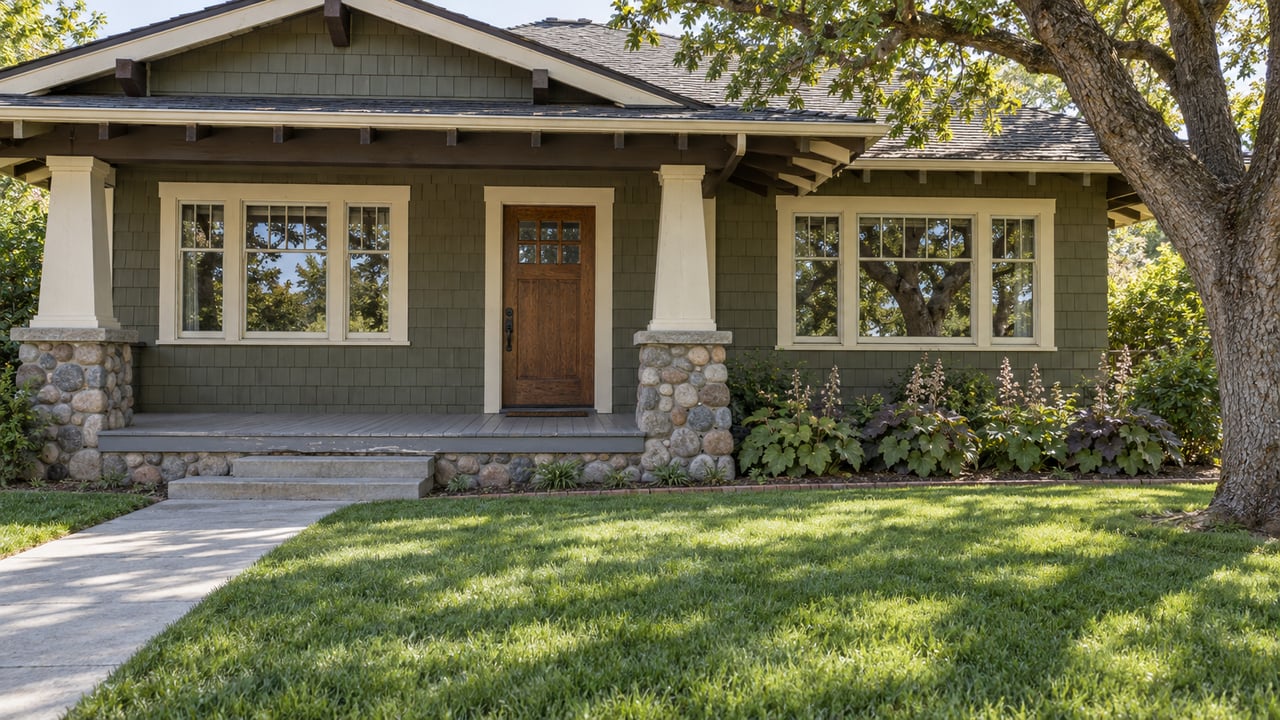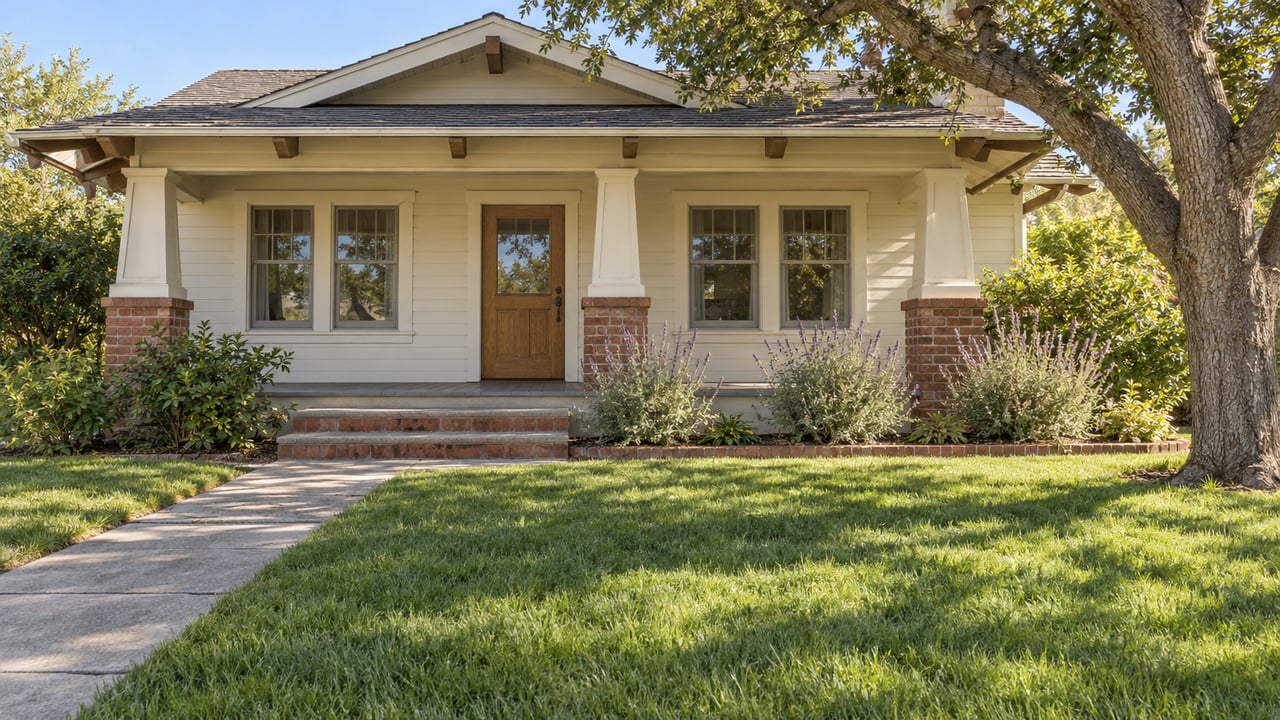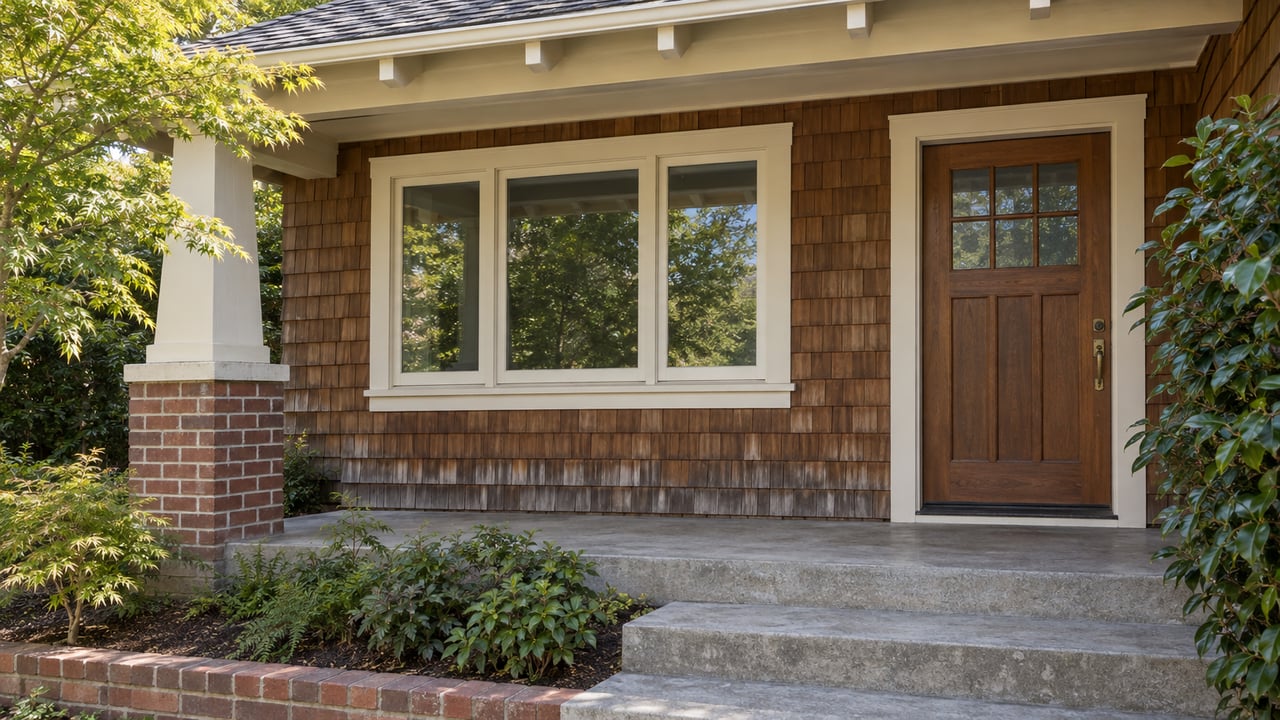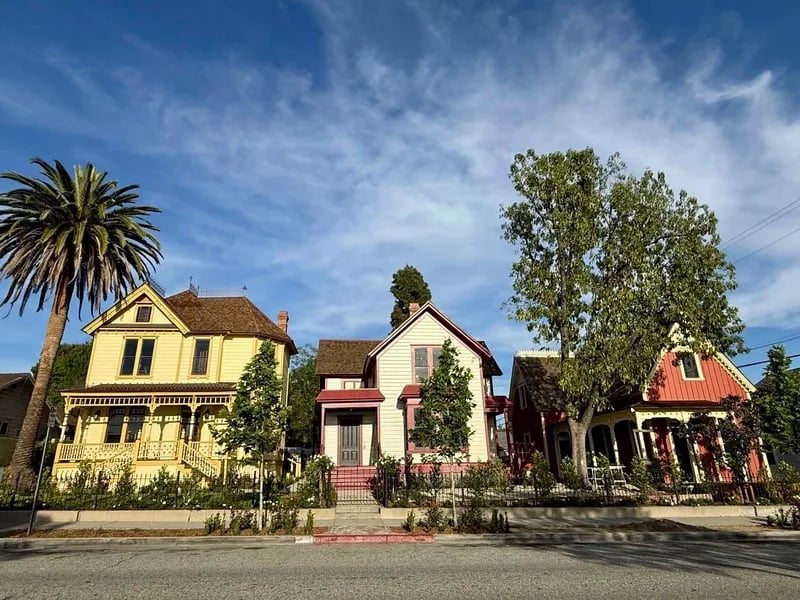
For most of last year, if you walked or drove down South Ivy Avenue past Foothill Boulevard, you passed scaffolding. Two aging houses sat behind it, worn but clearly old in the way that makes a person slow down and wonder. No sign explained what was happening. No banner announced a timeline. If you asked around Old Town, you got shrugs and guesses: a flip, a teardown, a permit fight that would drag on for years the way these things sometimes do in a city with as much protected historic housing stock as Monrovia has.
None of those guesses were right. As of early September this year, the corner at 512 South Ivy is open, and what's there is not a flip or a teardown. It's a restaurant called Viola's Bar & Bistro, an inn next door called the Arthur Blair Historic Inn, and a piece of the city's own record that most residents drove past for decades without knowing whose house it actually was.
Two Houses, One Family, One Very Specific Name
As Monrovia Now reported, the property that now holds Viola's and the Arthur Blair Historic Inn is built from three structures. Two of them are original 1887-era homes that were once owned by Steve Baker, who served as Monrovia's city historian for 30 years and as president of the Monrovia Historical Society until his death in 2022. Baker was a fifth-generation Monrovian who lived in the family home his own great-great-grandfather built on that lot in 1887. The third building on the site is new construction, designed to match the original two.
That matters more than it might sound like on paper. Baker wasn't a historian in the abstract, credentialed sense. He was the person other Monrovians called when they wanted to know what a building on their own street used to be, and he did it for three decades, including leading graveside tours at Live Oak Cemetery. When someone with that kind of standing dies, a small city loses a working memory it doesn't easily replace. The fact that his own family's houses are now the ones anchoring a public restaurant and inn isn't a coincidence of real estate. It's the closest thing Old Town has to continuity.
The project was built by Saxony Design Build in partnership with Experience CASA, and the team was explicit that they wanted the finished concept to feel like it belonged to the block rather than arriving to reinvent it. Managing partner Casarah Gutierrez told WhatNow she was going for a "nostalgic yet elevated" feel, the kind of place where you're dressed up a little but the food still tastes familiar.
That's the tone the menu is going for, and it's also, whether intentional or not, a fair description of what the whole property is doing with the neighborhood's own history.
What's Actually There Now
Viola's opened around Memorial Day weekend, aiming for brunch favorites and evening small plates with a beverage program built around beer and wine rather than a full cocktail list. The name is a nod to a previous owner's grandmother.
The inn portion, the Arthur Blair Historic Inn, held its grand opening on July 4, combining the two restored 1887 homes with the new third building into boutique lodging next door to the restaurant. The grand opening event itself did double duty: proceeds went toward acquiring period furnishings for the Monrovia Historical Society's George H. Anderson House Museum, which means the money spent celebrating one preserved property is directly funding the upkeep of another one across town.
If you've eaten there since, you've probably noticed the same thing reviewers keep mentioning: the outdoor seating and the pool on the grounds make it feel more like visiting a house than dining at a restaurant, because that's exactly what it is.
It Landed in an Already Full Week
Old Town Monrovia didn't need a new anchor. It already has a rhythm, and Viola's opened into the middle of it rather than trying to compete with it.
The Friday Night Street Fair & Market on Myrtle Avenue runs weekly, starting around 5 p.m., and it's the one fixture that doesn't take a season off. This past spring it even doubled as a stop for LA County's mobile voting center, which says something about how central that Friday footprint has become to how the city actually reaches residents, not just how it entertains them.
The other seasonal anchor, the Sunday Summer Concert Series, ran through August 9 this year, rotating between Station Square on South Myrtle and Library Park, with a lineup that ranged from salsa and jazz to Top 40. That series just wrapped for the season, which means if you're reading this now, you've likely already caught your last outdoor Sunday show at Station Square until next summer. Monrovia Days, the city's marquee community festival, also already happened this year, back in May.
Here's what that weekly and seasonal layering actually looks like if you're mapping your own routine around it:
- Fridays, year-round: Street Fair & Market on the 800 block of Myrtle Avenue, starting at 5 p.m.
- Sundays, summer only: Concert Series at Station Square or Library Park, this year running through August 9 and now finished until next year
- Anytime, now open: Viola's Bar & Bistro for brunch or evening small plates, and the Arthur Blair Historic Inn next door for anyone hosting out-of-town guests who'd rather stay a few blocks from the fair than drive in for it
The point isn't that Old Town suddenly has more things to do. It's that the one addition that got the most attention this year wasn't a new business chasing foot traffic. It was two existing houses, tied to one specific family, finally opened for the first time to the public that had been walking past them for a century.
The Actual Story Here
It would be easy to write this up as a restaurant opening. New brunch spot, historic building, nice patio, worth a Saturday morning. All of that is true, and none of it is the reason this particular opening is worth knowing about if you already live here.
The reason is that small cities keep their history alive in one of two ways. Either an institution catalogs it, which is what the Monrovia Historical Society and its Anderson House Museum do, carefully. Or someone finds an economic reason to keep the physical building standing and in use, which is what just happened on Ivy Avenue. Baker spent thirty years doing the first kind of preservation, built on memory, public speeches, and knowledge of local buildings. The restaurant and inn represent another way to keep historic places in use, one that depends on the buildings retaining their age and character.
The two approaches can complement each other. The restaurant and inn put these historic buildings to use, while the Anderson House Museum documents local history. If you want to see what long-term stewardship of a 19th-century property actually looks like, this corner of South Ivy Avenue is a working example, not a hypothetical.
For anyone who has spent the past year wondering what was behind the scaffolding, that's the answer. Not a flip. Not a teardown. A version of the neighborhood's own memory, still standing, now open for brunch.
If you're curious about what else is changing on your block, or you're thinking through a move within the San Gabriel Valley and want someone who actually knows which corners like this one are worth paying attention to, Renee Bannoura is always glad to talk it through. Let's Connect.